
Cat 8 Ethernet cables deliver 40Gbps speeds and 2000MHz bandwidth, making them the fastest consumer-grade networking option available in 2026. If you’re building a high-performance home network for 4K/8K streaming, competitive gaming, or transferring massive files between devices, Cat 8 Ethernet cables provide genuine performance headroom. But here’s what most guides won’t tell you: the majority of home users don’t need Cat 8 at all, and spending extra money on these premium cables often delivers zero real-world benefit over Cat 6a alternatives that cost half as much.
In the interest of transparency, we earn a commission on some purchases made through links on this site. As an Amazon Associate I earn from qualifying purchases.
The confusion starts with the name itself. When you search for “8 ethernet cable,” you’re likely looking for Category 8 cables, the newest specification designed for data centers and enterprise environments. These cables use heavy shielding (S/FTP construction with 26AWG conductors) and gold-plated RJ45 connectors to maintain signal integrity at extreme speeds over short distances, typically under 100 feet. They’re backward compatible with Cat 7, Cat 6a, Cat 6, and Cat 5e networks, so they’ll work in any standard Ethernet port.
The challenge is determining whether your setup can actually use those capabilities. Most consumer routers, gaming consoles like PS5 and PS4, and standard network equipment max out at 1Gbps or 2.5Gbps, meaning a Cat 6 cable delivers identical performance at a fraction of the cost. This guide reviews eight Ethernet products spanning Cat 5e through Cat 8 to help you choose quality ethernet cables matched to your actual networking infrastructure, not just the highest specification on the box.
Understanding Cat 8 Ethernet Cable Specifications
Shielding and Cable Construction
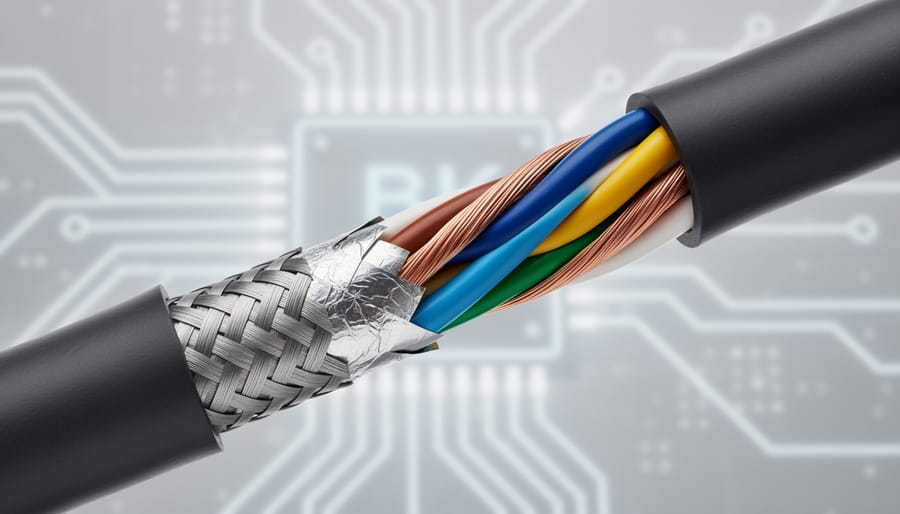
Cat 8 cables use S/FTP (Shielded Foiled Twisted Pair) construction, the most comprehensive shielding available in consumer Ethernet cables. This design wraps each of the four twisted pairs in individual aluminum foil shields, then adds an overall braided shield around all pairs. The double-layer approach blocks electromagnetic interference from external sources while preventing crosstalk between the internal pairs themselves.
The braided outer shield typically uses tinned copper or aluminum, woven tightly to create a physical barrier against radio frequency interference and electrical noise. This matters because at 40Gbps transmission speeds and 2000MHz frequencies, even minor interference can corrupt data packets and force retransmissions. You’ll notice Cat 8 cables feel noticeably stiffer and heavier than Cat6 cables, a direct result of the additional shielding layers and the thicker 26AWG conductors commonly used in these patch cables.
Heavy-duty construction extends beyond shielding to the connector boots and cable jacket. Quality Cat 8 cables feature reinforced strain relief boots that prevent the RJ45 connectors from loosening during repeated plugging and unplugging. The outer PVC or LSZH jacket is thicker than lower categories, protecting the internal shielding from physical damage during installation and daily use. For a deeper dive into how these specifications translate to real-world performance, see our Cat 8 specs explained guide.
Wire Gauge and Performance
Wire gauge represents a critical trade-off in Cat 8 cable design. The two common options, 26AWG and 23AWG, affect both how a cable performs and how you can use it.
26AWG wire uses thinner copper conductors, making cables notably more flexible and easier to route through tight spaces, around furniture, or behind entertainment centers. This thinner gauge dominates the patch cable market because flexibility matters when you’re connecting a gaming console, PC, or router in a residential setup. The trade-off is slightly higher electrical resistance over longer distances and reduced power-over-Ethernet capacity if you’re running devices that draw significant wattage through the cable itself.
23AWG wire delivers lower resistance and better signal integrity, particularly for runs approaching Cat 8’s 100-foot distance limit. The thicker copper handles power delivery more efficiently, making it the standard choice for bulk cable used in permanent installations behind walls or in conduit. You’ll find 23AWG in professional-grade bulk spools rather than pre-terminated patch cables because its stiffness makes it harder to work with in finished spaces.
For typical gaming or desktop connections under 25 feet, 26AWG provides all the performance Cat 8 promises while remaining manageable to install and unplug. Choose 23AWG only when you’re pulling cable through walls for permanent installations or need maximum PoE capability for powered devices like access points or security cameras.
Cat 8 vs. Other Ethernet Cable Categories
Cat 8 represents the cutting edge of consumer Ethernet technology, but that doesn’t mean it’s the right choice for everyone. Understanding how it stacks up against older standards helps you match the cable to your actual needs rather than paying for performance you’ll never use.
| Category | Max Speed | Bandwidth | Max Distance | Shielding | Best Use Case |
|---|---|---|---|---|---|
| Cat 5e | 1 Gbps | 100 MHz | 100 meters | Usually none (UTP) | Basic internet, older networks |
| Cat 6 | 1-10 Gbps | 250 MHz | 100m (1Gbps), 55m (10Gbps) | Usually none (UTP) | Home networking, gigabit internet |
| Cat 6a | 10 Gbps | 500 MHz | 100 meters | Often shielded (F/UTP) | Residential wiring, PoE devices |
| Cat 7 | 10 Gbps | 600 MHz | 100 meters | Fully shielded (S/FTP) | Outdoor runs, industrial settings |
| Cat 8 | 25-40 Gbps | 2000 MHz | 30 meters | Fully shielded (S/FTP) | Data centers, ultra-high-speed gaming |
The speed difference is dramatic. Cat 5e maxes out at 1 Gbps, which handles most residential internet connections fine since few home plans exceed that threshold. Cat 6 bumps you to 10 Gbps over short distances, making it solid for internal network traffic between devices. Cat 6a maintains that 10 Gbps across the full 100-meter span and adds better crosstalk protection. Cat 7 matches Cat 6a’s speed but wraps everything in heavy shielding for harsh environments. Cat 8 leaps to 40 Gbps but cuts the maximum run to just 30 meters.
That distance limitation matters more than most buyers realize. If you’re wiring through walls or across a large home office, Cat 8’s 30-meter ceiling can become a real constraint. Cat 6a gives you 10 Gbps with three times the reach, which covers most residential scenarios without compromise.
Backward compatibility works seamlessly. You can plug a Cat 8 cable into any device with a standard RJ45 port; it’ll negotiate down to whatever speed the equipment supports. Your gigabit router won’t suddenly deliver 40 Gbps just because you connected a Cat 8 cable, but the cable won’t cause problems either.
Cat 8 makes sense when you’re connecting high-performance gaming rigs directly to routers within the same room, linking network switches in a compact home lab, or future-proofing short patch cables for equipment that might eventually support multi-gig speeds. For everything else, Cat 6a offers a better balance of performance, flexibility, and cost. Cat 5e remains perfectly adequate if your internet plan sits below 1 Gbps and you’re connecting standard devices like smart TVs or printers. The key is matching the cable’s capabilities to what your network equipment can actually deliver and what your physical installation requires.
Key Factors When Buying a Cat 8 Cable
Cable Length and Application
Cat 8 cables work best for short, direct connections where maximum performance matters most. Choose 3 to 10 feet for desktop-to-router links or patch panel connections. For gaming consoles or media centers positioned farther from your network equipment, 15 to 25 feet handles most room layouts without excess cable creating clutter.
Longer runs introduce practical challenges. Cat 8’s official 30-meter (98-foot) maximum distance reflects the physical limits of maintaining 40Gbps speeds and 2000MHz bandwidth. Beyond that threshold, signal degradation becomes measurable. More importantly, Cat 8’s heavy-gauge construction and robust shielding quality make 50-foot+ cables stiff and unwieldy compared to thinner Cat6a alternatives, which complicates routing through tight spaces or cable management channels.
This explains why Cat 8 rarely appears in bulk spools. Manufacturers prioritize pre-terminated patch cables because the typical buyer needs a finished, ready-to-use connection for equipment racks, home theater setups, or gaming rigs. The connector build quality matters more in these applications than raw cable length, since you’re paying for verified performance at both termination points rather than DIY installation flexibility.
Gaming and Console Compatibility
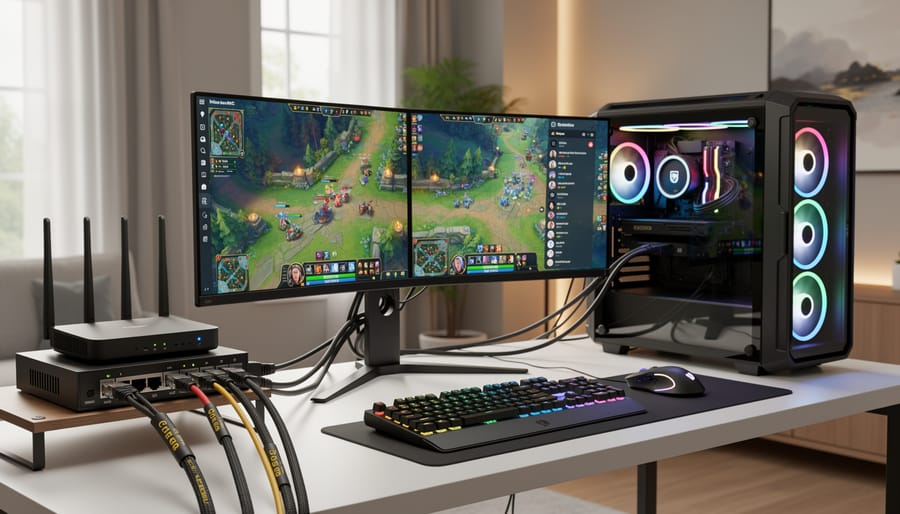
Gaming PCs and modern consoles can fully exploit Cat 8’s 40Gbps capability and 2000MHz bandwidth, but the real advantage lies in reduced latency and consistent signal quality during competitive play. When milliseconds matter in online shooters or fighting games, Cat 8’s superior shielding eliminates electromagnetic interference that can cause packet loss or jitter. The heavy-duty construction and gold-plated RJ45 connectors maintain stable connections during extended gaming sessions.
Cat 8 cables work seamlessly with PS5, PS4, PS3, Xbox consoles, gaming routers, and modems through standard RJ45 ports. Backward compatibility means your Cat 8 cable will perform optimally whether your console’s network adapter supports 1Gbps or 10Gbps speeds. The shielded design matters most in gaming setups where multiple devices, RGB lighting, and wireless peripherals create electronic noise that can degrade unshielded cables.
For competitive gamers, Cat 8 provides overhead that prevents network bottlenecks when streaming gameplay, downloading updates, and maintaining voice chat simultaneously. The 26AWG wire gauge in most gaming-length Cat 8 cables balances durability with flexibility, making cable management behind entertainment centers straightforward without sacrificing signal integrity.
Indoor vs. Outdoor Requirements
Indoor and outdoor Ethernet cables are built to entirely different standards, and using the wrong type will lead to premature failure. Indoor-rated cables lack the protective jackets that shield against UV radiation, temperature extremes, and moisture intrusion that outdoor installations face daily. Outdoor-rated Cat 8 cables feature thicker polyethylene (PE) or UV-resistant PVC jackets, often with waterproof shielding that prevents corrosion of the copper conductors. If you’re running cable through conduit between buildings or along exterior walls, outdoor-rated cable is non-negotiable.
For residential wiring projects, bulk cable makes sense when you need custom lengths and plan to terminate connections yourself, especially useful when you wire a network jack into walls. Pre-terminated patch cables work better for simple point-to-point connections where you need plug-and-play convenience. Most Cat 8 products come as patch cables because the standard targets short data center runs, not long residential installations. For outdoor bulk runs exceeding 100 feet, Cat6a or Cat7 often provides better value than Cat 8 while still delivering excellent performance for home networks.
UGREEN Cat 8 Ethernet Cable 6FT

The UGREEN 6-foot Cat 8 cable earns its strong reputation through substantive engineering choices rather than marketing promises. Its braided jacket, a step up from standard PVC, resists abrasion and kinking where desktop cables take daily punishment. The heavy-duty S/FTP shielding wraps each twisted pair individually, then adds a braided outer layer to block electromagnetic interference that can degrade signals in gaming setups crowded with electronics.
Rated for 40Gbps throughput and 2000MHz bandwidth, this cable delivers performance headroom few home networks currently need but future-proofs against faster routers and network cards. The 26AWG wire gauge keeps the cable flexible enough for tight desk routing while maintaining signal integrity across its six-foot span. Gold-plated RJ45 connectors resist corrosion and ensure consistent contact with console and router ports through repeated plug cycles.
Gaming compatibility stands out: the cable works with PS5, PS4, PS3, Xbox consoles, and standard network equipment without configuration hassles. Its shielding reduces latency variability, the millisecond inconsistencies that competitive gamers notice, by protecting signals from nearby USB hubs, wireless adapters, and power supplies.
With a 4.7 out of 5 rating from 63,196 customer reviews, the UGREEN cable shows reliability at scale. That review volume indicates years of consistent quality rather than a flash-in-the-pan launch.
The six-foot length suits specific scenarios perfectly: connecting a console or desktop PC to a nearby router, linking a media streaming box to a wall port, or running patch cables in a home theater rack. For longer runs or whole-house wiring, you’ll need different solutions. For short-distance connections where you want Cat 8’s full shielding and speed capabilities without excess cable clutter, this UGREEN option delivers.
TRUE CABLE Cat6A Riser (CMR)

TRUE CABLE’s Cat6A Riser offering takes a different approach than the patch cables we’ve examined so far. This is a bulk solution: 1000 feet of unshielded twisted pair cable on a spool, designed for structured wiring installations rather than quick device connections. The 23AWG solid bare copper conductor construction makes it ideal for in-wall residential runs where the cable stays in place once installed, trading the flexibility of stranded wire for better long-distance signal integrity.
The specs tell an important story about when Cat6a beats Cat 8 for home projects. With 750MHz bandwidth and 10Gbps capability at distances up to 100 meters, this cable delivers serious performance without the premium Cat 8 commands. The unshielded (U/UTP) design keeps costs down while still handling most residential networking demands. PoE++ support up to 100 watts means you can power security cameras, access points, and other devices through the same cable that carries data. The ETL listing confirms it meets riser (CMR) fire safety standards for vertical installation between floors.
Customer feedback reflects solid satisfaction, with a 4.8 out of 5 rating from 367 reviews. Users typically praise the pull-box design that prevents tangling during installation and the quality of the copper conductors. The blue jacket makes cable identification straightforward in crowded conduit or when you’re running multiple home runs to a central patch panel.
The reality is that most home networks won’t saturate 10Gbps capacity any time soon. If you’re wiring a house for future-proofing and need hundreds of feet, Cat6a bulk cable makes far more practical and economic sense than buying multiple Cat 8 patch cables or attempting a Cat 8 bulk installation. TRUE CABLE’s offering sits in that sweet spot where performance meets practical residential needs. Limited availability (only 5 left in stock at the time of review) suggests this is a product that moves when people discover the value proposition.
Cat 7 Outdoor Ethernet Cable 500ft (DIY Bulk Shielded Cat7 Cable x 30

This 500-foot DIY Cat7 bulk cable bundle tackles a fundamentally different challenge than pre-terminated patch cables: permanent installation through walls, ceilings, and outdoor conduit where you need custom lengths. The package pairs a 500ft spool of shielded Cat7 cable with 30 RJ45 connectors, letting you terminate exactly the lengths your project demands. With a 4.6 out of 5 rating from 958 customers, it’s proven reliable for residential wiring jobs where pulling pre-made cables isn’t practical.
The shielded construction delivers tangible benefits for outdoor runs. Unlike unshielded Cat5e or Cat6, the foil and braided shielding protects against electromagnetic interference from power lines, outdoor lighting circuits, and environmental electrical noise that plague long exterior cable runs. This matters when you’re running 150 feet from a main router to a detached garage or workshop, signal integrity stays consistent rather than degrading from external interference.
Bulk Cat7 makes more sense than pre-terminated Cat 8 patch cables in three scenarios. First, when you need runs longer than the 50-foot maximum most Cat 8 patches offer. Second, when you’re fishing cable through walls or conduit where bulky pre-attached connectors won’t fit. Third, when you need multiple custom lengths, terminating your own cables from bulk stock beats buying five different pre-made lengths.
The trade-off is termination skill. Crimping Cat7 connectors requires practice and the right tools; botched terminations waste cable and connectors. If you’re running a single 25-foot outdoor connection and lack crimping experience, a weather-resistant pre-terminated Cat6a or Cat7 patch cable eliminates that risk. But for whole-house wiring projects or multiple outdoor runs, this DIY approach delivers professional results at a fraction of hiring-out costs.
MONK CABLES

MONK CABLES enters the Cat 8 market with a straightforward approach that prioritizes accessibility over premium positioning. With a customer rating of 4.3 out of 5 stars from 704 ratings, this option sits slightly below the satisfaction levels of top-rated competitors like Cable Matters and TRUE CABLE, but the solid review volume suggests consistent availability and reasonable quality control.
The lower rating compared to other options in this roundup tells an important story about expectations versus delivery. While MONK CABLES meets the basic Cat 8 specifications, supporting 40Gbps speeds and 2000MHz bandwidth, customer feedback suggests the build quality and durability don’t quite match the heavy-duty construction found in UGREEN or Smolink cables. This isn’t necessarily a deal-breaker for every user, but it matters if you’re installing cables in tight spaces, behind walls, or anywhere physical stress might occur.
Where MONK CABLES finds its market fit is value-conscious buyers who need Cat 8 performance but won’t push the cables hard physically. If you’re connecting a gaming console to a nearby router in an open setup where the cable won’t be bent repeatedly or subjected to tension, the performance gap narrows considerably. The Cat 8 shielding and wire quality still deliver low-latency, high-bandwidth connections for gaming and streaming.
The competitive challenge for MONK CABLES is that Cat 8 buyers often prioritize premium build quality, they’re already paying more for the highest standard, so many choose cables with 4.7+ ratings that offer more confidence in long-term reliability. For most users, spending slightly more on a UGREEN or Smolink option provides better assurance and customer satisfaction.
Cat5e 1000 Ft 24AWG UTP 4 Twisted Pair Ethernet Router LAN Cable Wire

This bulk Cat5e option delivers a practical solution for large-scale residential wiring projects where maximum speed isn’t the priority. The 1000-foot pull box contains 24AWG unshielded twisted pair cable, rated for 100MHz bandwidth and 1Gbps speeds up to 328 feet. At 4.6 out of 5 from 486 ratings, users consistently praise its value for basic networking infrastructure.
The 24AWG wire gauge makes this cable more flexible than heavier 23AWG alternatives, simplifying installation through walls and conduit runs. The white color blends well with residential environments. Unshielded construction keeps costs down while still meeting TIA/EIA standards for voice and data transmission.
Cat5e remains perfectly adequate for most home internet connections, since ISP speeds rarely exceed 1Gbps. If you’re wiring rooms for smart TVs, security cameras, or general web browsing, this bulk cable handles those tasks without overspending on Cat 8 performance you won’t utilize. It also works for Voice over IP phone systems and basic office networks.
The performance gap compared to Cat 8 is substantial: this cable tops out at 1Gbps versus 40Gbps, and its 100MHz bandwidth is twenty times lower than Cat 8’s 2000MHz. Unshielded construction means greater susceptibility to electromagnetic interference in electrically noisy environments. For gaming PCs demanding minimal latency or future-proofed 10Gbps networks, Cat5e falls short.
Note that only four units remain in stock, so availability is limited for this particular option.
Monoprice Cat6 Ethernet Patch Cable

Monoprice’s Cat6 Ethernet patch cable occupies a sweet spot for users who need reliable gigabit performance without paying for Cat 8 specifications they won’t use. This 10-foot Flexboot series cable features 24AWG stranded pure bare copper wire, UTP construction, and 550MHz bandwidth, more than adequate for most home and small office networks. The snagless RJ45 connectors prevent tab breakage during installation and removal, a practical detail that extends the cable’s usable life.
With a customer rating of 4.7 out of 5 from 2,733 ratings, this Monoprice option has earned trust through consistent performance and value pricing. The stranded copper construction makes it flexible enough for patch panel work or desktop connections without the stiffness of solid-core bulk cable. While it lacks the shielding of Cat 8, UTP construction works fine for typical residential environments where electromagnetic interference isn’t a concern.
Cat6 provides sufficient performance for gigabit internet connections, local file transfers up to 10Gbps over shorter distances, and streaming multiple 4K video sources simultaneously. If your router maxes out at 1Gbps and you’re connecting devices within a standard room, Cat6 delivers the speed you’ll actually use. This cable proves the right choice when your network equipment doesn’t support beyond-gigabit speeds or when you’re simply connecting a smart TV, printer, or gaming console that won’t saturate a Cat6 link.
Cable Matters 10Gbps Snagless Cat 6 Ethernet Cable

The Cable Matters 10Gbps Snagless Cat 6 Ethernet Cable stands out as a reliable middle-ground option for users who don’t need Cat 8’s full 40Gbps capability but want robust performance for typical home and office networking. This 25-foot cable delivers 10Gbps speeds, which exceeds what most residential internet connections can actually utilize, making it a practical choice for streaming, gaming, and file transfers without paying the Cat 8 premium.
With an exceptional 4.8 out of 5 rating from 22,634 customers, this Cable Matters option has earned trust through proven reliability across thousands of installations. The snagless connector design protects the locking tab from breakage during installation and removal, a feature that matters more than most buyers realize when running cables through tight spaces or frequently moving equipment.
For 25-foot runs connecting routers to desktops, gaming consoles to switches, or media devices across a room, Cat6 at 10Gbps handles the job without compromise. Cat 8’s advantages only materialize in data center environments or when you’re pushing 25-40Gbps across very short distances. For the vast majority of home users, this best ethernet pick delivers identical real-world performance to Cat 8 while offering better availability, more length options, and proven track record across tens of thousands of satisfied users.
Smolink Cat 8 Ethernet Cable

The Smolink Cat 8 Ethernet Cable stands out in this roundup as the longest Cat 8 patch cable option at 50 feet, addressing a common challenge: bridging the distance between router and gaming console or media center without sacrificing the full 40Gbps/2000MHz performance Cat 8 delivers. While most Cat 8 cables top out at 6 to 25 feet, this extended length makes it viable for whole-room setups where devices sit across the space from your network equipment.
The cable features gold-plated RJ45 connectors and shielded construction designed to maintain signal integrity across the longer run. At 50 feet, you’re approaching the practical limit for patch cables before installation complexity and performance considerations push toward structured wiring, but this length hits a sweet spot for dedicated gaming rooms, home theater setups, or office configurations where pulling wall cable isn’t practical. The 4.7 out of 5 rating from 30,375 customer ratings suggests the cable holds up well in real-world use, with length not becoming a reliability liability.
The ideal scenario for this cable is a living room or bedroom gaming setup where your console or PC needs a wired connection but sits far from the router. Competitive gamers benefit from the reduced latency compared to Wi-Fi, and the Cat 8 specs future-proof the connection for upcoming console generations and multi-gigabit internet service upgrades. Media streamers running 4K or 8K content to network-attached devices also get clean bandwidth without wireless interference.
That said, don’t overbuy Cat 8 if your equipment maxes out at gigabit speeds. For a 50-foot run serving typical home devices, Cat6a costs less and performs identically in practice. Reserve this Smolink cable for situations where you genuinely need 10Gbps-plus throughput or want headroom for future network upgrades.
Expert Recommendations: Which Cat 8 Cable to Choose
After reviewing the products in this guide, the right Cat 8 cable depends on your specific networking scenario and budget constraints. Here’s how to match your needs to the best option.
For competitive gaming setups where low latency matters most, the UGREEN Cat 8 6FT cable delivers 40Gbps performance in a heavy-duty braided design that protects against interference. Its 6-foot length works perfectly for PS5, PS4, PS3, Xbox, or gaming PC connections where you need a short, reliable run from console to router without excess cable clutter.
When you need longer Cat 8 runs, say, connecting a media room setup or gaming rig in another room, the Smolink Cat 8 50FT cable extends that same 40Gbps/2000MHz performance across greater distances. It’s the longest Cat 8 option in this roundup and maintains signal integrity for extended patch connections.
- Best for gaming: UGREEN Cat 8 6FT (short run, braided protection, console-tested)
- Best for longer runs: Smolink Cat 8 50FT (extended distance, maintains performance)
- Best bulk value: TRUE CABLE Cat6A Riser 1000ft (residential wiring projects)
- Best budget option: Cable Matters Cat 6 25ft (10Gbps performance without premium pricing)
- Best outdoor installation: Cat 7 Outdoor 500ft bulk with RJ45 connectors (weather resistance, DIY flexibility)
However, most home users don’t actually need Cat 8’s full capabilities. If you’re running residential wiring through walls, the TRUE CABLE Cat6A Riser makes far more sense: it’s bulk cable optimized for in-wall installation, supports 10Gbps speeds that exceed most home internet connections, and costs less per foot. Similarly, the Cable Matters Cat 6 25ft cable provides 10Gbps performance for typical home and office use at a fraction of Cat 8’s price, backed by exceptional customer ratings.
Choose Cat 8 when you’re building a gaming setup where every millisecond counts or connecting high-performance network equipment. Choose Cat6a or Cat7 when you’re wiring a house, running outdoor connections, or simply don’t need more than 10Gbps speeds for the foreseeable future.
Common Mistakes to Avoid When Buying Cat 8 Cables
The most common mistake buyers make is purchasing Cat 8 cables when their network equipment can’t support speeds above 1Gbps. Your router, switch, and network cards must have multi-gigabit ports (2.5Gbps, 5Gbps, or 10Gbps) to benefit from Cat 8’s 40Gbps capability. If you’re plugging a Cat 8 cable into standard gigabit Ethernet ports, you’re paying a premium for performance you cannot access.
Cable length limitations represent another frequent oversight. Cat 8 maintains its full 40Gbps speed only up to 30 meters (about 98 feet), significantly shorter than Cat6a’s 100-meter range. Beyond that distance, performance degrades. Many buyers purchase 100-foot Cat 8 cables expecting full specs across the entire length, but physics doesn’t work that way.
Choosing the wrong wire gauge for your application causes problems too. Stranded 26AWG Cat 8 cables offer flexibility for patch connections between devices but shouldn’t be used for permanent in-wall installations. Conversely, rigid 23AWG solid copper works perfectly for walls and ceilings but won’t tolerate repeated bending at a desk or entertainment center. Match the construction to where you’re installing it.
Counterfeit and mislabeled cables flood the market. Some products claim Cat 8 certification but lack proper S/FTP shielding or use aluminum-clad copper instead of solid copper conductors. These fakes won’t deliver rated performance. Stick with established brands that specify their shielding construction and conductor materials clearly.
Finally, improper installation techniques undermine even genuine Cat 8 cables. Sharp bends (smaller than four times the cable diameter), excessive pulling force during installation, and crushed jackets from cable ties all damage the internal structure. These physical compromises create signal degradation that negates the precision engineering Cat 8 provides. Handle cables gently and follow proper bend radius guidelines during installation.
Main Options Compared
When choosing an Ethernet cable for high-speed networking, you’re ultimately deciding between Cat 5e, Cat 6, Cat 6a, Cat 7, and Cat 8 standards. Cat 5e delivers gigabit speeds (1Gbps) at 350MHz bandwidth and remains adequate for basic home internet and streaming, though it lacks headroom for future upgrades. Cat 6 pushes to 10Gbps over short distances with 250MHz bandwidth, offering solid middle-ground performance for most households without breaking the budget.
Cat 6a extends that 10Gbps capability to the full 100-meter distance at 500MHz, making it the sweet spot for new residential wiring projects where you want longevity without overspending. Cat 7 introduces full shielding (S/FTP construction) and 600MHz bandwidth but never gained widespread adoption in North America due to connector compatibility issues and marginal real-world advantages over Cat 6a.
Cat 8 represents the current performance ceiling: 40Gbps speeds, 2000MHz bandwidth, and robust S/FTP shielding, but it’s limited to 30-meter runs and typically costs three to four times more than Cat 6a. For gaming PCs, media servers, and professional setups where you’re actually pushing multi-gigabit data, Cat 8 delivers measurable benefits. For standard home use with gigabit internet, Cat 6 or Cat 6a provides everything you need.
Frequently Asked Questions About Cat 8 Cables
Is Cat 8 backward compatible with older Ethernet standards?
Yes, Cat 8 cables work with all previous Ethernet categories including Cat5e, Cat6, Cat6a, and Cat7. They use the same RJ45 connector standard, so you can plug a Cat 8 cable into any standard Ethernet port, though you’ll only get speeds up to what your devices and network equipment support.
How long can Cat 8 cables run before signal degradation?
Cat 8 cables maintain their full 40Gbps speed for distances up to 30 meters (roughly 100 feet). Beyond that length, you’ll experience signal loss and speed reduction, which is why Cat 8 is typically sold in shorter patch cable lengths rather than 1000-foot spools like Cat6 or Cat6a.
Do I actually need Cat 8 for gaming?
Most gamers don’t need Cat 8. While it does offer low latency benefits, a quality Cat6 or Cat6a cable handles gaming traffic just fine since even the most demanding online games rarely exceed 1Gbps bandwidth. Cat 8 makes sense if you’re running a 10Gbps network between your gaming PC and NAS for massive file transfers, but for connecting to a router or modem, you’re limited by your internet speed anyway.
What’s the difference between Cat 8.1 and Cat 8.2?
Cat 8.1 uses standard RJ45 connectors and is designed for backward compatibility with previous Ethernet standards, making it the version you’ll find in consumer products. Cat 8.2 uses GG45 or TERA connectors and is intended for data center and enterprise applications where compatibility with RJ45 isn’t required.
Can upgrading to Cat 8 improve my internet speed?
No. Your internet speed is determined by your service plan and ISP infrastructure, not your Ethernet cable. If you have gigabit internet, a Cat5e cable already handles that speed. Cat 8 only improves performance for internal network transfers between devices on your local network that support multi-gigabit speeds.
Is shielding really necessary in Cat 8 cables?
Yes, for Cat 8. The S/FTP shielding is integral to achieving 2000MHz bandwidth and maintaining signal integrity at 40Gbps speeds. Without proper shielding, you’d get interference and crosstalk that would degrade performance, especially in environments with multiple cables bundled together or near sources of electromagnetic interference.
These questions come up constantly because Cat 8 represents a significant jump in specifications, yet many buyers struggle to understand when those specs actually matter for their setup. The backward compatibility question arises from concerns about wasting money on cables that won’t work with existing equipment. In reality, Cat 8’s RJ45 connector makes it universally compatible, though the performance gains only materialize when your entire network chain supports higher speeds.
The distance limitation catches people off guard because they’re used to Cat6 and Cat6a running 300 feet or more at lower speeds. Cat 8’s 100-foot maximum at full speed reflects the physics of pushing 40Gbps through copper wire. That’s why you rarely see Cat 8 offered in bulk spools for whole-house installations, unlike Cat6a which remains the better choice for residential structured wiring.
The gaming question reflects marketing that oversells Cat 8’s benefits for typical home use. While the cables do deliver excellent performance, the bottleneck for online gaming sits elsewhere in the chain: your internet connection speed, server latency, and game netcode matter far more than whether you’re using Cat 6 or Cat 8 between your console and router.
Choosing the right Ethernet cable comes down to matching performance capabilities to your actual networking requirements, not chasing the highest specification on paper. Cat 8 cables deliver undeniable advantages for specific scenarios: ultra-low latency gaming, data center connections, future-proofing high-bandwidth home networks, and short-run applications where 40Gbps speeds and superior shielding matter. For these use cases, the investment makes sense.
However, most home users will find Cat6a or Cat7 cables provide excellent performance at lower cost, especially for runs over 30 feet where Cat 8’s distance limitations become problematic. Cat6 remains perfectly adequate for typical internet connections and streaming, while bulk Cat5e still serves budget installations where gigabit speeds suffice.
The buying factors covered here, shielding quality, wire gauge, cable length, connector construction, and compatibility, should guide your decision more than marketing claims about “gaming-grade” or “ultra-speed” performance. Verify specifications, read customer feedback, and honestly assess whether your network equipment can even utilize Cat 8’s capabilities.
This guide reflects unbiased analysis of what actually works for different networking scenarios. Make your choice based on technical requirements and real-world application, and you’ll get the performance you need without overspending on unnecessary capability.